Subject-specialist worked solutions — every mark explained. Topical & Yearly Solved, Revision Notes, Predicted Papers. Explore →

Exam Intelligence · 12 Official Documents Analysed

How to Score Higher in Cambridge AS & A Level Economics (9708)

Evidence-based Economics 9708 exam guide built from official examiner reports and mark schemes. Specialised and comprehensive study tips — specific, cited insights so you can achieve top grades.

Evidence-BasedBuilt from 12 official examiner reports & mark schemes (2023–2025)

What Are Assessment Objectives (AOs)?

Before we dive in, you need to understand how Cambridge actually marks your answers.

AO stands for Assessment Objective. Think of AOs as the different “skills” Cambridge tests you on in every single question. When an examiner marks your paper, they don't just give you a mark out of 12 based on how “good” your answer feels — they allocate specific marks to each AO separately.

For example, a 12-mark question might be split as: AO1 (2 marks) + AO2 (2 marks) + AO3 (2 marks) + AO4 (6 marks). If you write a perfect textbook answer but don't evaluate, you can only score 6 out of 12 — because the other 6 marks are specifically reserved for evaluation.

This is why understanding AOs matters: they tell you exactly what the examiner is looking for and how many marks each skill is worth. Here are the 3 AOs for this subject:

AO1

Knowledge and Understanding

35% of AS Level; 35% of A Level (47% of Papers 1 and 3; 33% of Papers 2 and 4)

Demonstrate that you know the economic terms, definitions, theories, and concepts. This is the foundation — defining key terms, stating formulae, and drawing diagrams correctly. It's the easiest marks to earn, but knowledge alone won't get you past Level 1.

AO2

Analysis

40% of AS Level; 40% of A Level (40% of Papers 1 and 3; 37% of Papers 2 and 4)

Explain HOW and WHY, not just WHAT. This means building chains of reasoning: cause → mechanism → consequence. For example, don't just state 'AD increases' — explain why it increases, what happens as a result, and trace the effect through to the final outcome. Applying economic theory to the specific context given in the question.

AO3

Evaluation

25% of AS Level; 25% of A Level (13% of Papers 1 and 3; 30% of Papers 2 and 4)

Make a supported judgement by weighing up both sides of an argument. This is where most marks are lost. Evaluation is NOT a summary of what you wrote — it requires you to compare the strength of different arguments in context and reach a reasoned conclusion that directly answers the question. One-sided answers earn zero evaluation marks.

The key takeaway: Most students lose marks not because they lack knowledge (AO1), but because they skip the higher-order skills — building chains of reasoning (AO2) and making supported judgements (AO3). Everything below shows you exactly how to hit each AO based on what examiners have written in their reports.

🚫

Top Mistakes in AS & A Level Economics 9708

The most common reasons students lose marks in AS & A Level Economics 9708, cited directly from official examiner reports across multiple sessions.

1

Asserting points without explanation — stating facts without explaining WHY or HOW

Mentioned in every examiner report across all sessions · Affects: Paper 2, Paper 4

What examiners say

Answers that simply state facts without any explanation are very unlikely to gain credit.

Paper 2, May/June 2023

Credit will not be given for lists of points or unexplained points unless the command word is identify. Points must be explained in the context of the question.

Paper 2, March 2023

How to fix this

Every point must answer WHY or HOW. Use cause-and-effect chains: 'X happens because... which leads to... resulting in...'. A stated fact is AO1 at best; an explained chain is AO2.

2

Weak or absent evaluation — summaries mistaken for evaluation, no concluding judgement

Flagged in every essay-based paper across all sessions · Affects: Paper 2, Paper 4

What examiners say

Effective evaluation was rare, and this is a skill most candidates need to acquire — they need to be able to use preceding analysis effectively to balance the respective arguments to form a balanced judgement.

Paper 2, March 2023

Summaries/simple statements in themselves are not valid evaluation.

Paper 2, March 2023

Although eight marks are allocated to 'knowledge and understanding' and 'analysis' in the part (b) questions, four marks are allocated to 'evaluation' which is 33 per cent of the total marks allocated.

Paper 2, March 2025

How to fix this

Evaluation is NOT a summary. You must: (1) analyse BOTH sides of the argument, (2) compare the strength of each side, (3) reach a justified conclusion that directly answers the question. One-sided answers cannot earn evaluation marks.

3

Not answering the specific question asked — writing pre-learned material instead of addressing the question

Mentioned in 7 out of 8 examiner reports · Affects: Paper 2, Paper 4

What examiners say

The key weakness in some of the answers was that some candidates did not direct their response precisely to the question asked.

Paper 4, May/June 2023

How to fix this

Read the question twice before writing. Identify the specific command word, the specific context, and any qualifiers ('always', 'alone', 'to what extent'). Your answer must directly address what is asked — not what you have memorised.

4

Incorrect diagram labelling — wrong axis labels, missing labels, or wrong diagram type entirely

Mentioned in every examiner report for Papers 2 and 4 · Affects: Paper 2, Paper 4

What examiners say

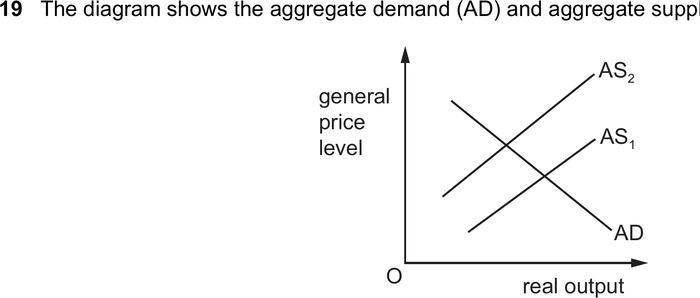
Some incorrectly labelled the axes as 'price' rather than 'price level' and as 'quantity' rather than 'output' or 'real GDP', while others labelled the curves as 'D' and 'S' rather than as 'AD' and 'AS'.

Paper 2, May/June 2023

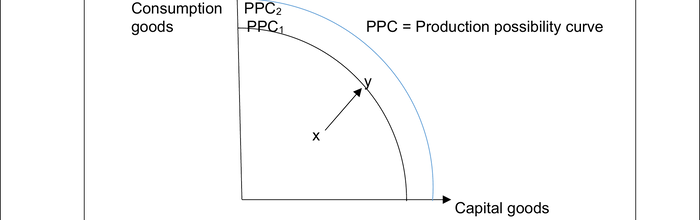
A significant minority of candidates gained 0 marks because they were unable to draw an accurate PPC diagram due to incorrect labelling with P and Q being the most common example.

Paper 2, May/June 2023

Candidates failing to produce a correctly labelled and relevant diagram would not gain marks beyond L2 in the essay section of the paper.

Paper 4, May/June 2023

How to fix this

Always label diagrams correctly: AS/AD diagrams need 'Price Level' (y-axis) and 'Real GDP' (x-axis) with curves labelled 'AD' and 'AS'. PPC axes should be named after the two goods. Exchange rate diagrams need 'Exchange Rate ($/£)' on the y-axis. Never use generic 'P' and 'Q'.

5

Describing data point-by-point instead of identifying overall trends or changes

Mentioned in every data response section across all sessions · Affects: Paper 2, Paper 4

What examiners say

Some candidates described what happened in every month between July 2020 and May 2021 rather than calculating what happened over the period as a whole.

Paper 2, May/June 2023

How to fix this

For data response questions, identify the OVERALL trend or change between the specified dates. Do not describe each individual data point. Calculate the total change, identify the direction, and note any significant turning points — not every year.

6

Confusing related economic concepts

Recurring across multiple sessions · Affects: Paper 1, Paper 2, Paper 3, Paper 4

Commonly confused pairs

Terms of Trade vs Balance of Trade

A significant number of candidates still confuse terms of trade with balance of trade and, despite knowing the formula, proceed to discuss the value rather than the prices of exports and imports.

Paper 2, March 2025

Inflation rate falling vs prices falling

Around 50 per cent of candidates recognised that positive rates of inflation (even if rates are falling) meant that prices continue to increase albeit at a slower rate. The most common error was to state that a fall in inflation rates meant prices were also falling.

Paper 2, May/June 2022

Public goods vs merit goods

A common misconception among candidates is that goods provided directly by the government are automatically public goods.

Paper 2, May/June 2022

Savings vs Investment (FDI vs hot money)

This question exposed a confusion between savings and investment as many candidates suggested that FDI would fall as interest rates fell which of course is not necessarily the case.

Paper 2, Oct/Nov 2021

Production vs Productivity

Production and productivity were frequently confused. Also comments on low-income countries were often little more than descriptions of low GDP.

Paper 4, May/June 2023

Negative externalities of consumption vs production

A significant number of candidates failed to recognise this distinction. A significant number of responses produced a diagram appropriate for negative externalities of production, instead of negative externalities of consumption.

Paper 4, March 2023

How to fix this

Create a revision table of commonly confused pairs. For each pair, write the precise definition and the key difference. Terms of trade = index of export prices / import prices. Balance of trade = value of exports minus value of imports.

7

Poor time management — spending too long on low-mark questions

Mentioned in 5 out of 8 examiner reports · Affects: Paper 2, Paper 4

What examiners say

There is still a tendency to spend too much time on the 2-mark questions and also on detailed discussions within essays of information that is not relevant to the question.

Paper 2, March 2025

Candidates now need to allocate their time more effectively according to the mark allocations for each question. There were examples of candidates seemingly running out of time having spent unproductive time on short answer questions.

Paper 2, March 2023

How to fix this

Allocate time strictly by marks. A 2-mark question should take 2–3 minutes maximum. An 8-mark part (a) should take about 10 minutes. A 12-mark part (b) should get 15–18 minutes. Never write paragraphs for a 2-mark question.

8

Drawing diagrams but never referencing them in the written answer

Mentioned in 4 examiner reports for Paper 4 · Affects: Paper 4

What examiners say

The use of badly drawn, or inaccurately labelled diagrams, or perfectly presented diagrams without any reference to them in the essay re-occurred as did the use of pre-learned answers that did not match the question which had been set.

Paper 4, May/June 2023

How to fix this

Every diagram must be explicitly referenced in your written answer. Write 'As shown in the diagram...' and explain what the diagram illustrates. A standalone diagram with no written explanation earns no analysis marks.

Apply what you've learned

Practice identifying these mistakes in real papers. Try a recent paper and mark yourself — you'll spot these patterns immediately.

What AS & A Level Economics 9708 Examiners Reward

Patterns that consistently earn high marks in AS & A Level Economics 9708, based on examiner report commentary on top-scoring answers.

Developed chains of reasoning with cause-and-effect structure

Examiners consistently reward explanations that follow a logical chain: State fact → Explain mechanism → Show consequence → Link to question. ERs across all sessions note that analysis requires 'further elaboration and explanation/application' beyond AO1.

Source: Paper 2, March 2025

Both sides analysed before a justified conclusion

Part (b) essays that examine only one side 'will be highly unlikely to gain more than mid-Level 2 analysis and will not be awarded evaluation marks'. L3 analysis requires balanced coverage.

Source: Paper 2, March 2025

Accurate, fully labelled diagrams explained in the text

In Paper 4 essays, 'L2 Max if no relevant diagram provided'. Candidates with correct diagrams AND textual explanation consistently score Level 3+. Diagrams are necessary but not sufficient — they must be accompanied by written analysis.

Source: Paper 4, May/June 2023; Paper 4, March 2025

Context-specific application using data from the extract

For data response questions, examiners reward answers that reference specific figures from the data, apply concepts to the given context, and do not write generic theory answers detached from the stimulus material.

Source: Paper 2, All sessions 2021–2025

Developed evaluative comments that compare argument strength

L2 evaluation (3–4 marks in Paper 2, 4–6 in Paper 4) requires 'developed, reasoned and well-supported evaluative comment(s)'. This means weighing which argument is stronger in this specific context, considering factors like short-run vs long-run, elasticity, or government capacity.

Source: Mark schemes, all sessions

Contrasting policy approaches with reasoned judgement on which is best

The strongest responses 'went on to conclude that the best policy would ultimately depend on the specific type of inflation being experienced and the financial position of the government.' Context-dependent conclusions score highest.

Source: Paper 2, March 2025

📝

AS & A Level Economics 9708 Answer Frameworks

Structured approaches for each AS & A Level Economics 9708 question type, derived from mark scheme requirements.

Part (a) essay — 8 marks (3 AO1 + 3 AO2 + 2 AO3)

8–10 minutes

Structure

Define key terms (AO1: up to 3) → Explain with diagram if relevant (AO2: up to 3) → Brief judgement answering 'consider' element (AO3: up to 2)

  • Include a relevant, labelled diagram where applicable — it counts as AO1
  • AO2 marks require you to explain and apply, not just state
  • The 2 AO3 marks require a brief evaluative judgement, not a full essay — one paragraph is enough
  • Reserve 1 mark is often for a justified conclusion

Part (b) essay — 12 marks (8 AO1+AO2 + 4 AO3)

15–18 minutes

Structure

Side A: At least two developed chains of reasoning → Side B: Counter-arguments or limitations → Evaluation: Compare strength of arguments → Conclusion: Direct answer to the question

  • One-sided answers CANNOT earn evaluation marks and are capped at mid-Level 2 analysis
  • Each 'chain of reasoning' should be 3–4 sentences explaining cause → mechanism → effect
  • Evaluation is 33% of the marks — it is not optional
  • Your conclusion must directly answer the question, not summarise your essay

Paper 4 essay — 20 marks (14 AO1+AO2 + 6 AO3)

30–35 minutes

Structure

Introduction with definitions → Analysis with diagram (explained in text) → At least two developed chains of reasoning → Counter-analysis → Developed evaluative comments → Justified conclusion

  • A relevant diagram is REQUIRED to access Level 3 — without one you are capped at Level 2 (10 marks max)
  • If the command word is 'evaluate', you must question the validity of the statement
  • If the command word is 'discuss', you must present both sides and conclude
  • At least two developed chains of reasoning are needed for Level 3 analysis
  • Evaluation is worth 6 marks (30%) — develop at least two evaluative points plus a conclusion

Data response 6-mark question

8–10 minutes

Structure

Analysis of one side (up to 3 marks) → Analysis of the other side (up to 3 marks, max 4 total for analysis) → Evaluative judgement (up to 2 marks, 1 reserved for conclusion)

  • Use data from the extract — do not write generic theory
  • Both sides must be covered for full analysis marks
  • End with a brief evaluative conclusion that answers the question

Practice by topic

Use topical past papers to practice specific question types. Each topic collects questions from multiple years — perfect for drilling the frameworks above.

💬

AS & A Level Economics 9708 Command Words Decoded

Each command word in AS & A Level Economics 9708 is a scoring instruction. Understanding what examiners expect is critical to earning full marks.

explainTypically used in part (a) questions. Triggers AO1 + AO2 marks.

Provide a developed chain of reasoning — not just a definition. State what, then explain how and why.

Common mistake

Simply defining a term or stating a fact without developing the explanation.

considerTriggers the 2 AO3 marks in part (a) questions.

Appended to 'explain' questions in part (a). Requires you to offer a judgement or weigh up the point made.

Common mistake

Treating it as 'describe' — writing about a topic without reaching any judgement.

assessUsed in data response and essay questions. Requires evaluation + conclusion.

Analyse both sides then make a supported judgement about the extent, significance or effectiveness of something.

Common mistake

Simply describing effects without judging their significance or comparing them.

discussUsed in Paper 4 essays. Triggers both AO2 and AO3. One-sided answers score mid-L2 at best.

Present arguments on both sides of a debate and draw a conclusion. Requires an argument structure, not a list.

Common mistake

Presenting one side only, or listing points without debating them.

evaluateUsed in Paper 4 essays. Requires questioning the statement, not just analysing impacts.

The strongest evaluation demand. Analyse, question the validity of the statement, weigh evidence, and reach a substantiated conclusion.

Common mistake

Analysing the impact without questioning whether the statement is actually true. 'Evaluate' requires you to test the claim.

Teachers might take note of the importance of the need by learners to question the validity of all statements which are followed by the command word 'evaluate'.

compareTypically 2–4 marks in data response.

Identify similarities AND differences between two things, using the same criteria for both.

Common mistake

Simply describing each item separately, or using subjective terms like 'worsened'.

📐

AS & A Level Economics 9708 Diagram Checklist

Incorrect diagrams in AS & A Level Economics 9708 are flagged in every examiner report. Use this checklist before every practice and in the exam.

Mark scheme example: AS/AD diagram

AS/AD diagram

Axes: Real GDP / Real Output × Price Level

Label curves as AD, SRAS, LRAS — never D and S

Common error: Labelling axes as P and Q, or curves as D and S

Mark scheme example: Supply and demand (micro)

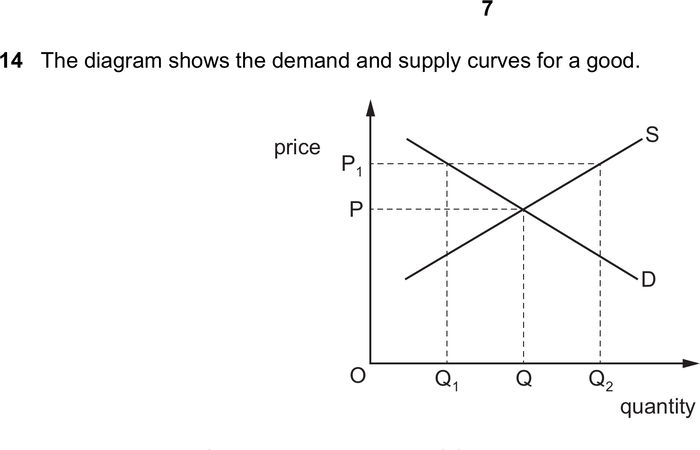
Supply and demand (micro)

Axes: Quantity × Price ($)

Label as D and S with shifts shown as D1→D2 or S1→S2

Common error: Not showing clear shift direction or failing to mark new equilibrium

Mark scheme example: Production Possibility Curve

Production Possibility Curve

Axes: Good B × Good A

Concave curve that touches BOTH axes

Common error: Labelling axes as P and Q; curve not touching axes

Mark scheme example: Exchange rate diagram

Exchange rate diagram

Axes: Quantity of currency × Exchange Rate (price of £ in $)

Supply and demand for the currency

Common error: Labelling y-axis simply as 'Price'

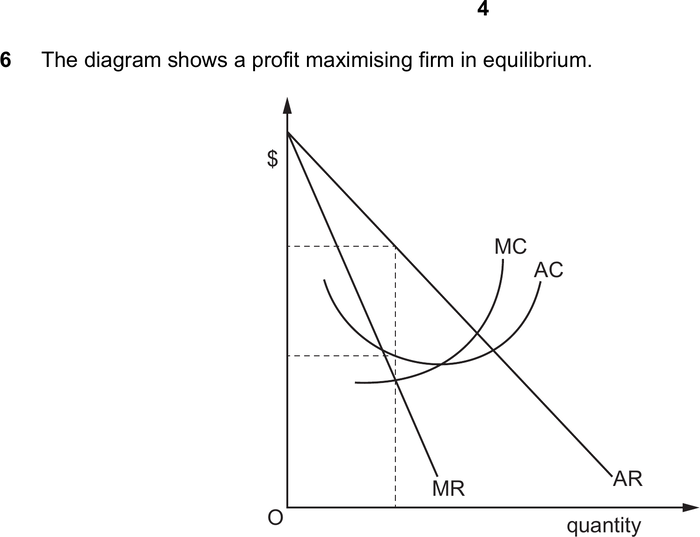
Mark scheme example: Monopoly / Imperfect competition

Monopoly / Imperfect competition

Axes: Quantity × Price / Cost / Revenue

AR, MR, MC, AC — MC must intersect AC at its minimum point

Common error: MC not intersecting AC at minimum; AR/MR relationship wrong

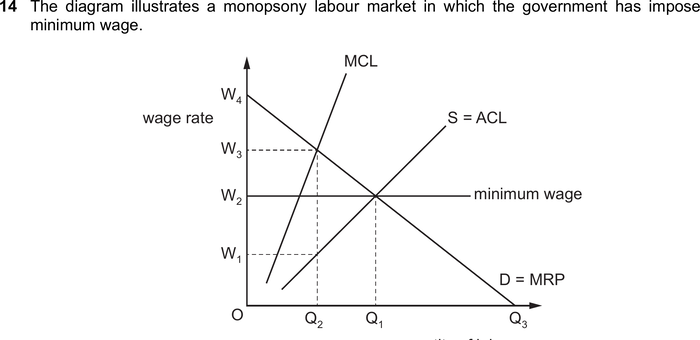
Mark scheme example: Monopsony labour market

Monopsony labour market

Axes: Quantity of labour × Wage rate

S(L) = AC(L), MC(L) above S(L), D(L) = MRP

Common error: Drawing a perfectly competitive labour market diagram instead

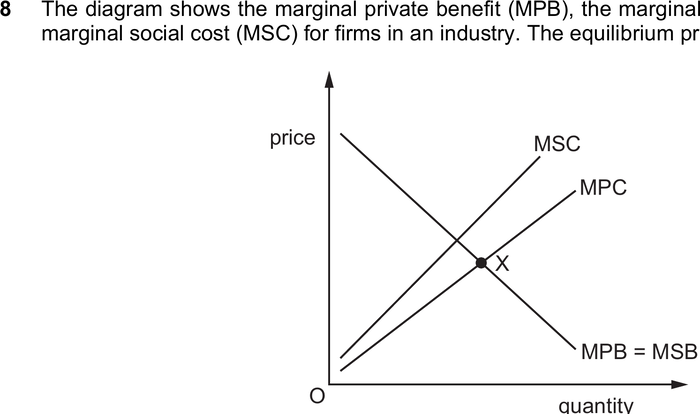
Mark scheme example: Externalities (consumption)

Externalities (consumption)

Axes: Quantity × Price / Cost / Benefit

MPB, MSB (for positive) or MPB above MSB (for negative consumption externality)

Common error: Drawing a production externality diagram (MSC/MPC) for a consumption externality question

⚠️

Topics Students Struggle With Most In AS & A Level Economics 9708

These AS & A Level Economics 9708 topics consistently produce the lowest scores. Prioritise these in your revision.

!

Terms of trade

Confused with balance of trade in multiple sessions. 'Despite knowing the formula, proceed to discuss the value rather than the prices of exports and imports. Such answers can only gain 1 mark maximum.' (March 2025)

Affects: Paper 1, Paper 2, Paper 3

!

Comparative advantage calculations

Only 20% correct on MCQ. '41 per cent of candidates concluded that it was the other way around.' (May/June 2023). Absolute vs comparative advantage distinction not understood.

Affects: Paper 1, Paper 3

!

Multiplier and credit multiplier calculations

Only 22% correct. 'Those who chose option A may not have taken into account the extra increase in income created by a multiplier.' (Oct/Nov 2022)

Affects: Paper 3

!

Price elasticity of demand and total revenue relationship

Only 27% correct. Candidates cannot link PED to whether total revenue rises or falls when price changes. (May/June 2023)

Affects: Paper 1

!

Public goods vs merit goods

'A common misconception among candidates is that goods provided directly by the government are automatically public goods.' (May/June 2022). Non-rivalrous and non-excludable must be defined separately.

Affects: Paper 2

!

Monopsony labour market

'The overwhelming majority of candidates provided a diagram that did not relate specifically to a monopsonistic firm. Diagrams relating to a perfectly competitive labour market were provided instead.' (March 2025)

Affects: Paper 4

!

Income and substitution effects with indifference curves

'It was very difficult to distinguish the separate movements of the substitution effect and the income effect.' Indifference curves drawn crossing each other. (Oct/Nov 2021)

Affects: Paper 3, Paper 4

!

Keynesian consumption function and inflationary/deflationary gap

Only 19% correct on MCQ. Candidates ignore constants in the consumption function and cannot calculate equilibrium national income. (March 2025)

Affects: Paper 3

Target your weak areas

The topics above are where most marks are lost. Use past papers and mark schemes to practice these specific areas until they become second nature.

Frequently Asked Questions

How are marks split in Cambridge A Level Economics Paper 2 essays?

Paper 2 essays have two parts. Part (a) is worth 8 marks: 3 for knowledge (AO1), 3 for analysis (AO2), and 2 for evaluation (AO3). Part (b) is worth 12 marks: 8 for knowledge and analysis combined, and 4 for evaluation. Evaluation accounts for 33% of part (b) marks — it is not optional.

How are marks split in Cambridge A Level Economics Paper 4 essays?

Paper 4 essays are worth 20 marks each with no part (a)/(b) split. 14 marks are for knowledge and analysis (AO1+AO2) and 6 marks are for evaluation (AO3). You MUST include a relevant diagram to access Level 3 analysis — without one, you are capped at Level 2 (maximum 10 marks for analysis).

What is the most common mistake in Economics 9708 according to examiners?

The single most common mistake is asserting points without explanation. Examiners across every session note that candidates state facts or definitions without explaining how or why they are relevant. Every point must include a developed chain of reasoning with cause-and-effect logic to earn analysis marks.

What does the command word 'evaluate' require in Economics 9708?

Evaluate requires you to question the validity of the statement in the question, not just analyse its impacts. The examiner explicitly states: 'Analysing the impact did not constitute evaluative comment. Evaluation required learners to question the extent of the impact.' You must test the claim, weigh evidence, and reach a substantiated conclusion.

Methodology: Analysis of 6 official Cambridge examiner reports and 6 mark schemes (2023–2025). All examiner quotes are taken directly from official Cambridge Assessment International Education principal examiner reports. Question references correspond to specific past paper questions. This guide is updated when new examiner reports are released. Last updated: 2026-04-05.